
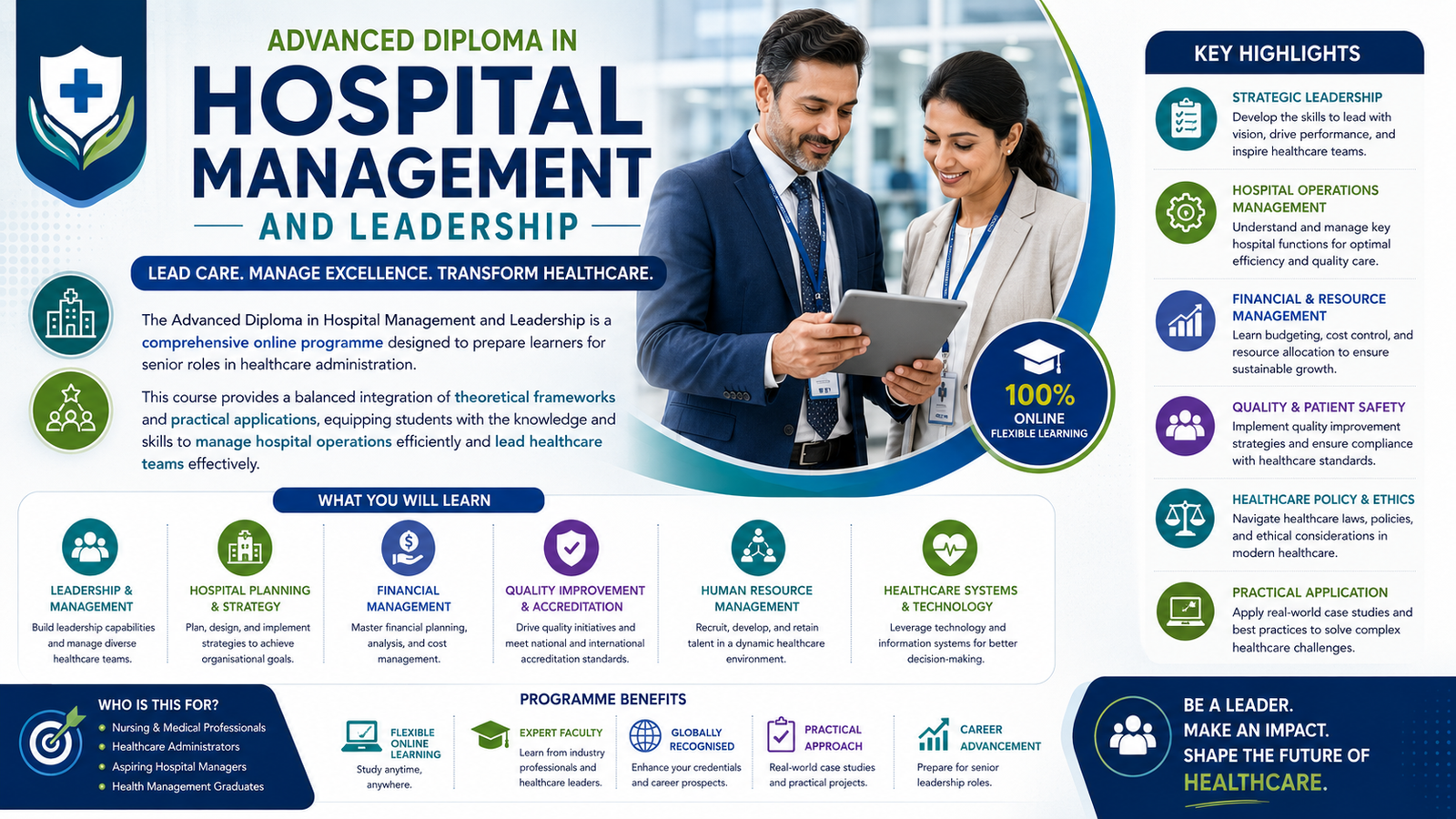
The Advanced Diploma in Hospital Management and Leadership is a comprehensive online programme designed to prepare learners for senior roles in healthcare administration. This course provides a balanced integration of theoretical frameworks and practical applications, equipping students with the knowledge and skills to manage hospital operations efficiently and lead healthcare teams effectively.
Aligned with UK healthcare and management standards, the programme explores topics such as healthcare policy, quality management, hospital operations, leadership principles, and financial planning in healthcare. It also focuses on strategic decision-making, patient safety, and innovation in hospital management to meet the evolving demands of modern healthcare systems.
Ideal for professionals already in healthcare or those seeking to transition into management roles, this diploma empowers learners to drive organisational excellence, implement effective leadership practices, and contribute to improved patient care outcomes within hospitals and healthcare institutions.
Applicants must hold a bachelor’s degree or equivalent in a relevant field such as healthcare, business management, or nursing. Work experience in healthcare or a related area is preferred. Non-native English speakers should demonstrate English proficiency with an IELTS score of 6.5 or equivalent to ensure success in the programme.
Course Fee: £500
The course fee includes access to online learning materials, assessments, tutor support and the student learning portal.
Payment Options:
Please contact the admissions team for further information regarding payment arrangements.
Introduction to Hospital Management
Hospital management involves the administration and coordination of healthcare facilities to ensure efficient operations and high-quality patient care. Modern hospital managers oversee clinical services, finance, human resources, and compliance with healthcare laws. Facing challenges like rising patient demands and limited resources, effective management balances patient care and operational efficiency, ensuring sustainable, safe, and quality-driven healthcare delivery.
Financial Management in Healthcare
Financial Management in Healthcare involves planning, organising, and controlling financial resources to ensure hospitals and healthcare organisations operate efficiently and sustainably. It includes budgeting, cost control, revenue management, and financial analysis to optimise resource allocation. Effective financial management supports quality patient care, regulatory compliance, and long-term stability while enabling informed decision-making and strategic growth within healthcare institutions.
Human Resources Management
Human Resources (HR) Management in Healthcare is essential for building and sustaining a skilled, motivated workforce that meets the sector’s growing demands. HR professionals handle recruitment, training, retention, and regulatory compliance. Effective HR management enhances organisational success, workforce efficiency, and patient care quality, ensuring healthcare institutions operate smoothly while fostering professional development and high standards of clinical excellence.
Quality Improvement and Patient Safety
Quality Improvement (QI) in healthcare is a continuous, structured process aimed at enhancing effectiveness, efficiency, safety, and equity in care delivery. It applies systematic methods to improve patient outcomes, reduce errors, and optimise workflows. Understanding QI principles and drivers helps healthcare professionals foster a culture of excellence, accountability, and continuous improvement across all aspects of healthcare services.
Leadership and Strategic Management
Leadership and Strategic Planning in Healthcare are vital for achieving high-quality patient care and long-term organisational success. Effective leaders inspire teams, set a clear vision, and foster continuous improvement. Strategic planning aligns hospital resources, staff, and services with long-term objectives, ensuring competitiveness, financial sustainability, and enhanced patient outcomes. Together, they drive innovation, accountability, and excellence in healthcare delivery.
Healthcare Marketing and Public Relations
Healthcare Marketing and Public Relations (PR) are essential for building trust and connecting healthcare providers with patients. Healthcare marketing strategically promotes services, educates the public, and strengthens patient-provider relationships through advertising, community engagement, and digital outreach. Public relations focus on maintaining a positive image, transparent communication, and stakeholder trust, enhancing patient confidence, staff morale, and the hospital’s reputation within the community.
Students of the Advanced Diploma in Hospital Management and Leadership can progress to next level in healthcare management, public health, or business administration. This qualification also prepares learners for leadership and administrative roles in hospitals, healthcare organisations, and public health systems, providing a strong academic and professional foundation for career advancement and further higher education opportunities.
The Advanced Diploma in Hospital Management and Leadership is a comprehensive online programme designed to prepare learners for senior roles in healthcare administration. This course provides a balanced integration of theoretical frameworks and practical applications, equipping students with the knowledge and skills to manage hospital operations efficiently and lead healthcare teams effectively.
Aligned with UK healthcare and management standards, the programme explores topics such as healthcare policy, quality management, hospital operations, leadership principles, and financial planning in healthcare. It also focuses on strategic decision-making, patient safety, and innovation in hospital management to meet the evolving demands of modern healthcare systems.
Ideal for professionals already in healthcare or those seeking to transition into management roles, this diploma empowers learners to drive organisational excellence, implement effective leadership practices, and contribute to improved patient care outcomes within hospitals and healthcare institutions.
Applicants must hold a bachelor’s degree or equivalent in a relevant field such as healthcare, business management, or nursing. Work experience in healthcare or a related area is preferred. Non-native English speakers should demonstrate English proficiency with an IELTS score of 6.5 or equivalent to ensure success in the programme.
Course Fee: £500
The course fee includes access to online learning materials, assessments, tutor support and the student learning portal.
Payment Options:
Please contact the admissions team for further information regarding payment arrangements.
Introduction to Hospital Management
Hospital management involves the administration and coordination of healthcare facilities to ensure efficient operations and high-quality patient care. Modern hospital managers oversee clinical services, finance, human resources, and compliance with healthcare laws. Facing challenges like rising patient demands and limited resources, effective management balances patient care and operational efficiency, ensuring sustainable, safe, and quality-driven healthcare delivery.
Financial Management in Healthcare
Financial Management in Healthcare involves planning, organising, and controlling financial resources to ensure hospitals and healthcare organisations operate efficiently and sustainably. It includes budgeting, cost control, revenue management, and financial analysis to optimise resource allocation. Effective financial management supports quality patient care, regulatory compliance, and long-term stability while enabling informed decision-making and strategic growth within healthcare institutions.
Human Resources Management
Human Resources (HR) Management in Healthcare is essential for building and sustaining a skilled, motivated workforce that meets the sector’s growing demands. HR professionals handle recruitment, training, retention, and regulatory compliance. Effective HR management enhances organisational success, workforce efficiency, and patient care quality, ensuring healthcare institutions operate smoothly while fostering professional development and high standards of clinical excellence.
Quality Improvement and Patient Safety
Quality Improvement (QI) in healthcare is a continuous, structured process aimed at enhancing effectiveness, efficiency, safety, and equity in care delivery. It applies systematic methods to improve patient outcomes, reduce errors, and optimise workflows. Understanding QI principles and drivers helps healthcare professionals foster a culture of excellence, accountability, and continuous improvement across all aspects of healthcare services.
Leadership and Strategic Management
Leadership and Strategic Planning in Healthcare are vital for achieving high-quality patient care and long-term organisational success. Effective leaders inspire teams, set a clear vision, and foster continuous improvement. Strategic planning aligns hospital resources, staff, and services with long-term objectives, ensuring competitiveness, financial sustainability, and enhanced patient outcomes. Together, they drive innovation, accountability, and excellence in healthcare delivery.
Healthcare Marketing and Public Relations
Healthcare Marketing and Public Relations (PR) are essential for building trust and connecting healthcare providers with patients. Healthcare marketing strategically promotes services, educates the public, and strengthens patient-provider relationships through advertising, community engagement, and digital outreach. Public relations focus on maintaining a positive image, transparent communication, and stakeholder trust, enhancing patient confidence, staff morale, and the hospital’s reputation within the community.
Students of the Advanced Diploma in Hospital Management and Leadership can progress to next level in healthcare management, public health, or business administration. This qualification also prepares learners for leadership and administrative roles in hospitals, healthcare organisations, and public health systems, providing a strong academic and professional foundation for career advancement and further higher education opportunities.



Want to receive push notifications for all major on-site activities?