
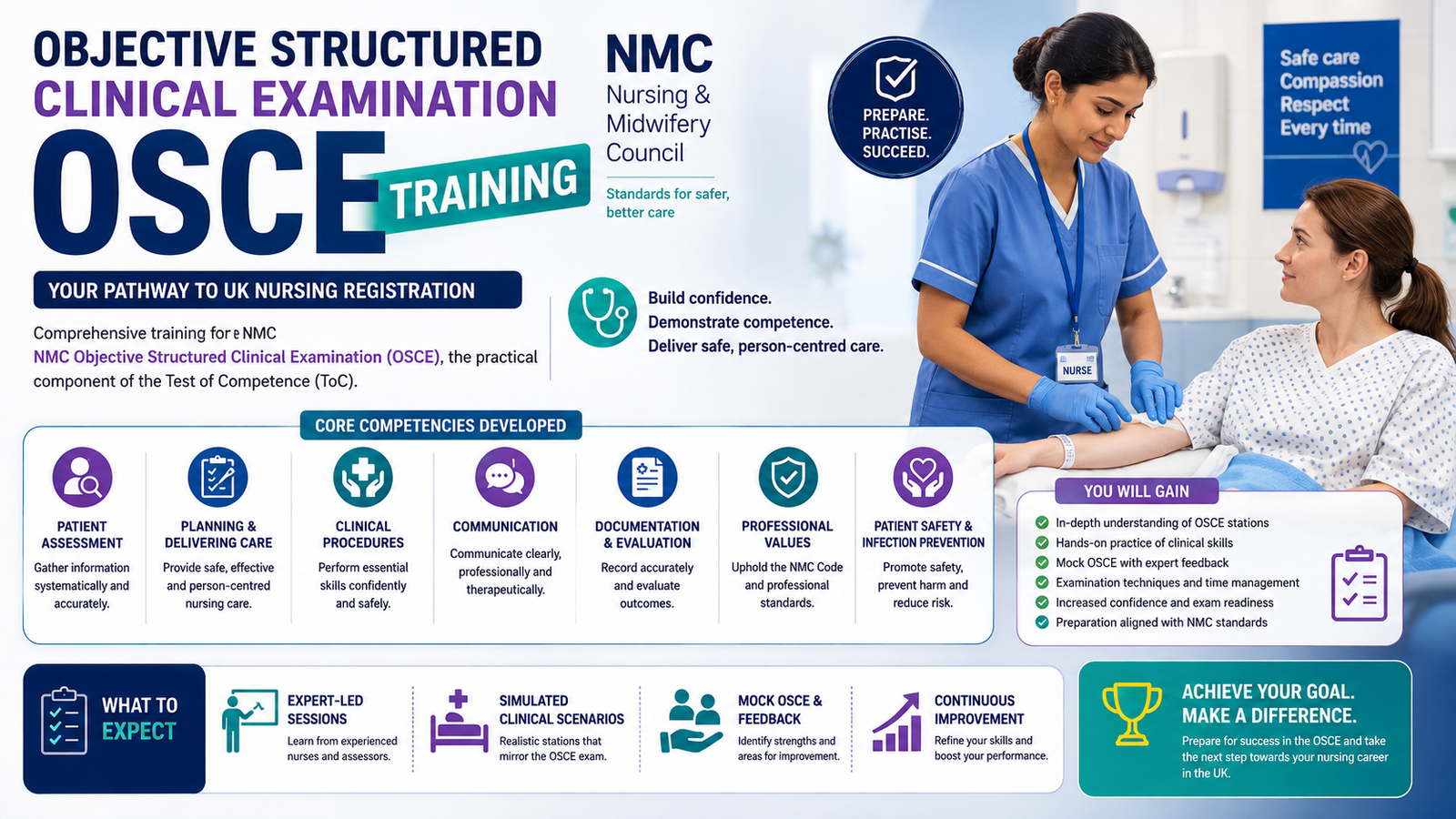
The Objective Structured Clinical Examination (OSCE) Training course is designed to prepare nurses for the practical component of the Nursing and Midwifery Council (NMC) Test of Competence required for UK nursing registration. The programme develops the clinical knowledge, practical skills, professional behaviours and confidence needed to perform effectively within simulated assessment scenarios.
Learners develop competence in patient assessment, planning and delivering care, clinical procedures, communication, documentation, evaluation, professional values and patient safety. Training uses demonstrations, practical exercises, simulated clinical scenarios and mock OSCE stations, with emphasis on person-centred care, infection prevention, evidence-based practice and the NMC Code.
This training is primarily designed for internationally educated nurses preparing for the NMC OSCE as part of their UK registration pathway. Learners should have a recognised nursing qualification and appropriate clinical knowledge and experience, together with adequate English language proficiency for effective communication in clinical settings. Basic digital literacy and commitment to practical skills development, simulation exercises and mock assessments are recommended.
Course Fee: £4,500
The course fee includes access to online learning materials, assessments, tutor support and the student learning portal.
Payment Options:
Please contact the admissions team for further information regarding payment arrangements.
Introduction to NMC OSCE
Introduces the NMC OSCE and its role within the Test of Competence. Learners explore examination structure, station types, marking principles, professional standards, preparation techniques and time management.
Clinical Practice and Skills Stations
Develops practical clinical competencies including patient assessment, care planning, implementation, evaluation, medication-related activities, infection prevention and relevant clinical procedures, with emphasis on safe and person-centred practice.
Professional Values and Ethics
Explores accountability, confidentiality, consent, dignity, safeguarding, equality, professional boundaries, duty of care and patient advocacy. Learners apply the NMC Code to clinical scenarios and professional judgement.
Communication and Interpersonal Skills
Develops communication with patients, relatives, carers and healthcare professionals, including active listening, questioning, empathy, information sharing, documentation, cultural sensitivity and responses to communication barriers.
Leadership and Management
Covers delegation, accountability, prioritisation, teamwork, workload management, risk identification, escalation of concerns and multidisciplinary collaboration, with a focus on patient safety and coordinated care.
Mock Exams and Final Preparation
Consolidates learning through realistic mock OSCE examinations and structured practice sessions. Learners practise under examination-style conditions, receive feedback and strengthen clinical confidence, communication, time management and examination technique.
Completion of OSCE Training primarily supports professional progression through the NMC registration pathway rather than direct university entry.
Learners may subsequently pursue further academic study in nursing, advanced clinical practice, healthcare management, public health, or specialist nursing fields.
Successful NMC registration can also support continued professional development and progression towards postgraduate nursing and healthcare qualifications in the UK.
The Objective Structured Clinical Examination (OSCE) Training course is designed to prepare nurses for the practical component of the Nursing and Midwifery Council (NMC) Test of Competence required for UK nursing registration. The programme develops the clinical knowledge, practical skills, professional behaviours and confidence needed to perform effectively within simulated assessment scenarios.
Learners develop competence in patient assessment, planning and delivering care, clinical procedures, communication, documentation, evaluation, professional values and patient safety. Training uses demonstrations, practical exercises, simulated clinical scenarios and mock OSCE stations, with emphasis on person-centred care, infection prevention, evidence-based practice and the NMC Code.
This training is primarily designed for internationally educated nurses preparing for the NMC OSCE as part of their UK registration pathway. Learners should have a recognised nursing qualification and appropriate clinical knowledge and experience, together with adequate English language proficiency for effective communication in clinical settings. Basic digital literacy and commitment to practical skills development, simulation exercises and mock assessments are recommended.
Course Fee: £4,500
The course fee includes access to online learning materials, assessments, tutor support and the student learning portal.
Payment Options:
Please contact the admissions team for further information regarding payment arrangements.
Introduction to NMC OSCE
Introduces the NMC OSCE and its role within the Test of Competence. Learners explore examination structure, station types, marking principles, professional standards, preparation techniques and time management.
Clinical Practice and Skills Stations
Develops practical clinical competencies including patient assessment, care planning, implementation, evaluation, medication-related activities, infection prevention and relevant clinical procedures, with emphasis on safe and person-centred practice.
Professional Values and Ethics
Explores accountability, confidentiality, consent, dignity, safeguarding, equality, professional boundaries, duty of care and patient advocacy. Learners apply the NMC Code to clinical scenarios and professional judgement.
Communication and Interpersonal Skills
Develops communication with patients, relatives, carers and healthcare professionals, including active listening, questioning, empathy, information sharing, documentation, cultural sensitivity and responses to communication barriers.
Leadership and Management
Covers delegation, accountability, prioritisation, teamwork, workload management, risk identification, escalation of concerns and multidisciplinary collaboration, with a focus on patient safety and coordinated care.
Mock Exams and Final Preparation
Consolidates learning through realistic mock OSCE examinations and structured practice sessions. Learners practise under examination-style conditions, receive feedback and strengthen clinical confidence, communication, time management and examination technique.
Completion of OSCE Training primarily supports professional progression through the NMC registration pathway rather than direct university entry.
Learners may subsequently pursue further academic study in nursing, advanced clinical practice, healthcare management, public health, or specialist nursing fields.
Successful NMC registration can also support continued professional development and progression towards postgraduate nursing and healthcare qualifications in the UK.

Want to receive push notifications for all major on-site activities?