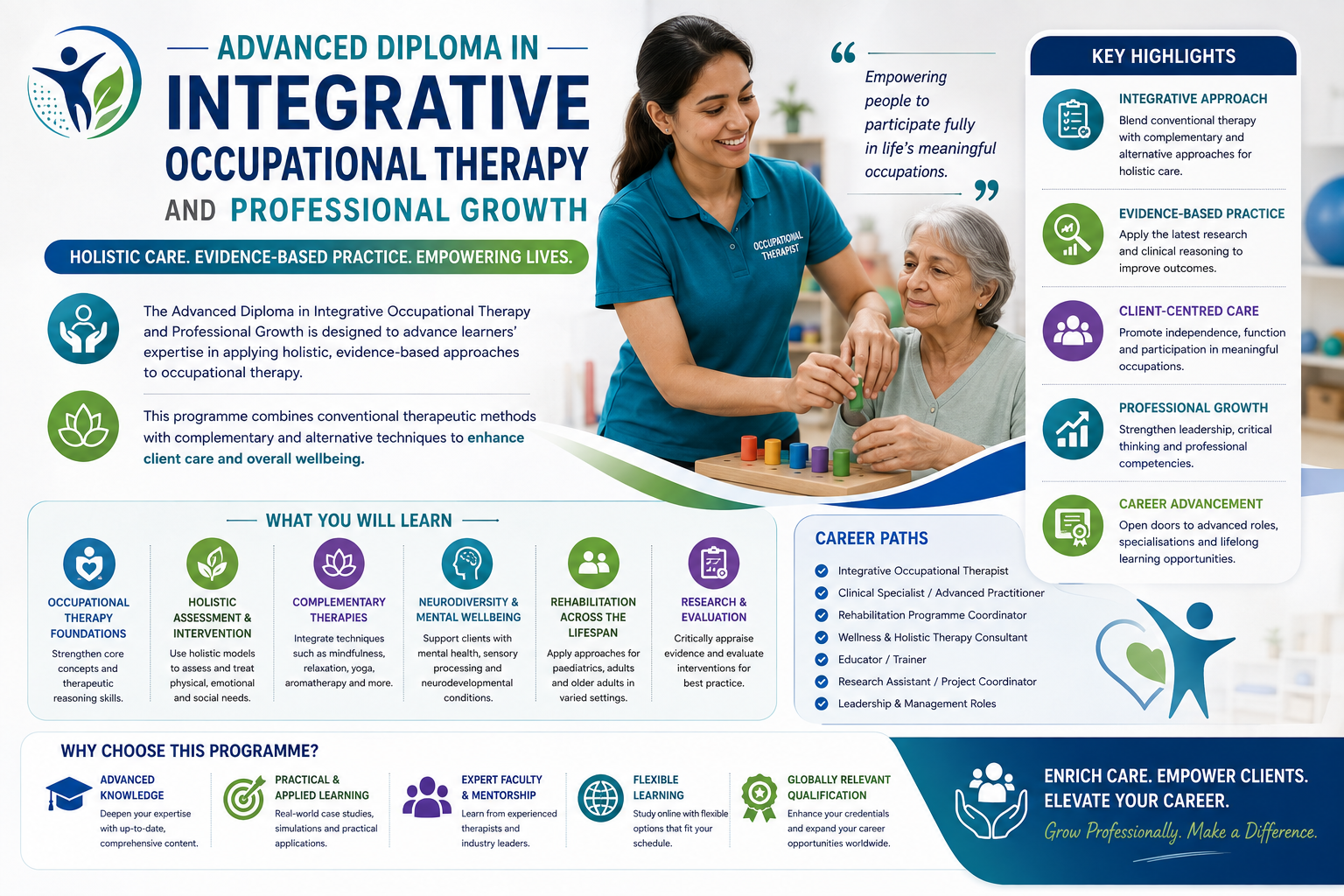
The Advanced Diploma in Integrative Occupational Therapy and Professional Growth is designed to advance learners’ expertise in applying holistic, evidence-based approaches to occupational therapy. This programme combines conventional therapeutic methods with complementary and alternative techniques to enhance client care and overall wellbeing. Learners will explore advanced topics in rehabilitation, mental health support, adaptive technologies, and person-centred intervention planning.
Emphasis is placed on integrating physical, psychological, and social aspects of therapy, allowing practitioners to develop tailored interventions for individuals across diverse clinical and community settings. The course also focuses on professional development, encouraging reflective practice, ethical decision-making, and leadership within multidisciplinary teams.
Through a blend of theory, research, and hands-on practice, learners gain the competence to provide innovative, compassionate, and effective care. Graduates emerge prepared to contribute meaningfully to the evolving field of occupational therapy and promote holistic health and wellbeing across all life stages.
Applicants must hold a bachelor’s degree in occupational therapy or a related field and have at least one year of professional experience in occupational therapy or healthcare. They should demonstrate English proficiency and have access to a computer with reliable internet for online learning. These requirements ensure readiness for advanced study and professional development.
Course Fee: £500
The course fee includes access to online learning materials, assessments, tutor support and the student learning portal.
Payment Options:
Please contact the admissions team for further information regarding payment arrangements.
Foundations of Integrative Occupational Therapy
The Foundations of Integrative Occupational Therapy module introduces the core principles, history, and evolution of integrative practice in occupational therapy. Learners explore how combining diverse therapeutic approaches supports clients’ physical, emotional, and psychological wellbeing. Through readings, case studies, and reflective activities, students develop a holistic understanding that fosters both personal and professional growth in therapeutic practice.
Advanced Therapeutic Approaches in Occupational Therapy
In occupational therapy, advanced therapeutic approaches are vital for managing complex conditions and improving patient outcomes. These methods extend beyond basic interventions, offering specialised, targeted care to enhance clients’ overall wellbeing. Key approaches include Neurodevelopmental Treatment (NDT) for motor control, Sensory Integration Therapy (SIT) for sensory processing, and Cognitive Behavioural Therapy (CBT) for addressing emotional and behavioural challenges.
Evidence-Based Practice in Occupational Therapy
Evidence-Based Practice (EBP) is a cornerstone of modern occupational therapy, ensuring high-quality and effective client care. It combines current research, clinical expertise, and client preferences to deliver interventions that are both scientifically validated and personalised. Mastering EBP enables occupational therapists to remain up to date with emerging knowledge, enhance client outcomes, and drive continual professional and sector-wide improvement.
Client-Centred Care and Ethical Considerations
Client-centred care is a core principle of occupational therapy that focuses on recognising and honouring each client’s individual needs, preferences, and values. It ensures therapy is personalised, empowering clients to take an active role in their treatment. Rooted in autonomy, collaboration, and tailored intervention, this approach strengthens the therapeutic relationship and leads to more meaningful and effective outcomes.
Leadership and Professional Development
Leadership in Occupational Therapy is a crucial component of professional practice that extends beyond administrative responsibilities. It encompasses the ability to guide, influence, and inspire colleagues, clients, and other stakeholders toward achieving optimal health outcomes. Leadership can take many forms, including clinical leadership, where therapists direct and support patient care, and managerial leadership, involving the coordination of therapy teams, resources, and service delivery. Effective leadership fosters innovation, collaboration, and continuous improvement, ensuring high standards of practice and empowering occupational therapists to make meaningful contributions within diverse healthcare environments.
Complementary and Alternative Therapies in Occupational Therapy
Complementary and Alternative Therapies (CAT) refer to diverse practices and treatments used to promote holistic health and wellbeing by addressing the physical, mental, emotional, and spiritual aspects of care. Often integrated with conventional medicine, these therapies support symptom management and enhance overall quality of life. Common examples include acupuncture, aromatherapy, yoga, meditation, massage therapy, and chiropractic care, each contributing to balanced, person-centred healing.
Graduates of the Advanced Diploma in Integrative Occupational Therapy and Professional Growth can progress to next level in occupational therapy, rehabilitation sciences, or healthcare management. This qualification also supports entry into leadership and specialised clinical roles within healthcare organisations, enabling professionals to advance academically and professionally while contributing to holistic, evidence-based, and integrative healthcare practices.
The Advanced Diploma in Integrative Occupational Therapy and Professional Growth is designed to advance learners’ expertise in applying holistic, evidence-based approaches to occupational therapy. This programme combines conventional therapeutic methods with complementary and alternative techniques to enhance client care and overall wellbeing. Learners will explore advanced topics in rehabilitation, mental health support, adaptive technologies, and person-centred intervention planning.
Emphasis is placed on integrating physical, psychological, and social aspects of therapy, allowing practitioners to develop tailored interventions for individuals across diverse clinical and community settings. The course also focuses on professional development, encouraging reflective practice, ethical decision-making, and leadership within multidisciplinary teams.
Through a blend of theory, research, and hands-on practice, learners gain the competence to provide innovative, compassionate, and effective care. Graduates emerge prepared to contribute meaningfully to the evolving field of occupational therapy and promote holistic health and wellbeing across all life stages.
Applicants must hold a bachelor’s degree in occupational therapy or a related field and have at least one year of professional experience in occupational therapy or healthcare. They should demonstrate English proficiency and have access to a computer with reliable internet for online learning. These requirements ensure readiness for advanced study and professional development.
Course Fee: £500
The course fee includes access to online learning materials, assessments, tutor support and the student learning portal.
Payment Options:
Please contact the admissions team for further information regarding payment arrangements.
Foundations of Integrative Occupational Therapy
The Foundations of Integrative Occupational Therapy module introduces the core principles, history, and evolution of integrative practice in occupational therapy. Learners explore how combining diverse therapeutic approaches supports clients’ physical, emotional, and psychological wellbeing. Through readings, case studies, and reflective activities, students develop a holistic understanding that fosters both personal and professional growth in therapeutic practice.
Advanced Therapeutic Approaches in Occupational Therapy
In occupational therapy, advanced therapeutic approaches are vital for managing complex conditions and improving patient outcomes. These methods extend beyond basic interventions, offering specialised, targeted care to enhance clients’ overall wellbeing. Key approaches include Neurodevelopmental Treatment (NDT) for motor control, Sensory Integration Therapy (SIT) for sensory processing, and Cognitive Behavioural Therapy (CBT) for addressing emotional and behavioural challenges.
Evidence-Based Practice in Occupational Therapy
Evidence-Based Practice (EBP) is a cornerstone of modern occupational therapy, ensuring high-quality and effective client care. It combines current research, clinical expertise, and client preferences to deliver interventions that are both scientifically validated and personalised. Mastering EBP enables occupational therapists to remain up to date with emerging knowledge, enhance client outcomes, and drive continual professional and sector-wide improvement.
Client-Centred Care and Ethical Considerations
Client-centred care is a core principle of occupational therapy that focuses on recognising and honouring each client’s individual needs, preferences, and values. It ensures therapy is personalised, empowering clients to take an active role in their treatment. Rooted in autonomy, collaboration, and tailored intervention, this approach strengthens the therapeutic relationship and leads to more meaningful and effective outcomes.
Leadership and Professional Development
Leadership in Occupational Therapy is a crucial component of professional practice that extends beyond administrative responsibilities. It encompasses the ability to guide, influence, and inspire colleagues, clients, and other stakeholders toward achieving optimal health outcomes. Leadership can take many forms, including clinical leadership, where therapists direct and support patient care, and managerial leadership, involving the coordination of therapy teams, resources, and service delivery. Effective leadership fosters innovation, collaboration, and continuous improvement, ensuring high standards of practice and empowering occupational therapists to make meaningful contributions within diverse healthcare environments.
Complementary and Alternative Therapies in Occupational Therapy
Complementary and Alternative Therapies (CAT) refer to diverse practices and treatments used to promote holistic health and wellbeing by addressing the physical, mental, emotional, and spiritual aspects of care. Often integrated with conventional medicine, these therapies support symptom management and enhance overall quality of life. Common examples include acupuncture, aromatherapy, yoga, meditation, massage therapy, and chiropractic care, each contributing to balanced, person-centred healing.
Graduates of the Advanced Diploma in Integrative Occupational Therapy and Professional Growth can progress to next level in occupational therapy, rehabilitation sciences, or healthcare management. This qualification also supports entry into leadership and specialised clinical roles within healthcare organisations, enabling professionals to advance academically and professionally while contributing to holistic, evidence-based, and integrative healthcare practices.

Want to receive push notifications for all major on-site activities?