
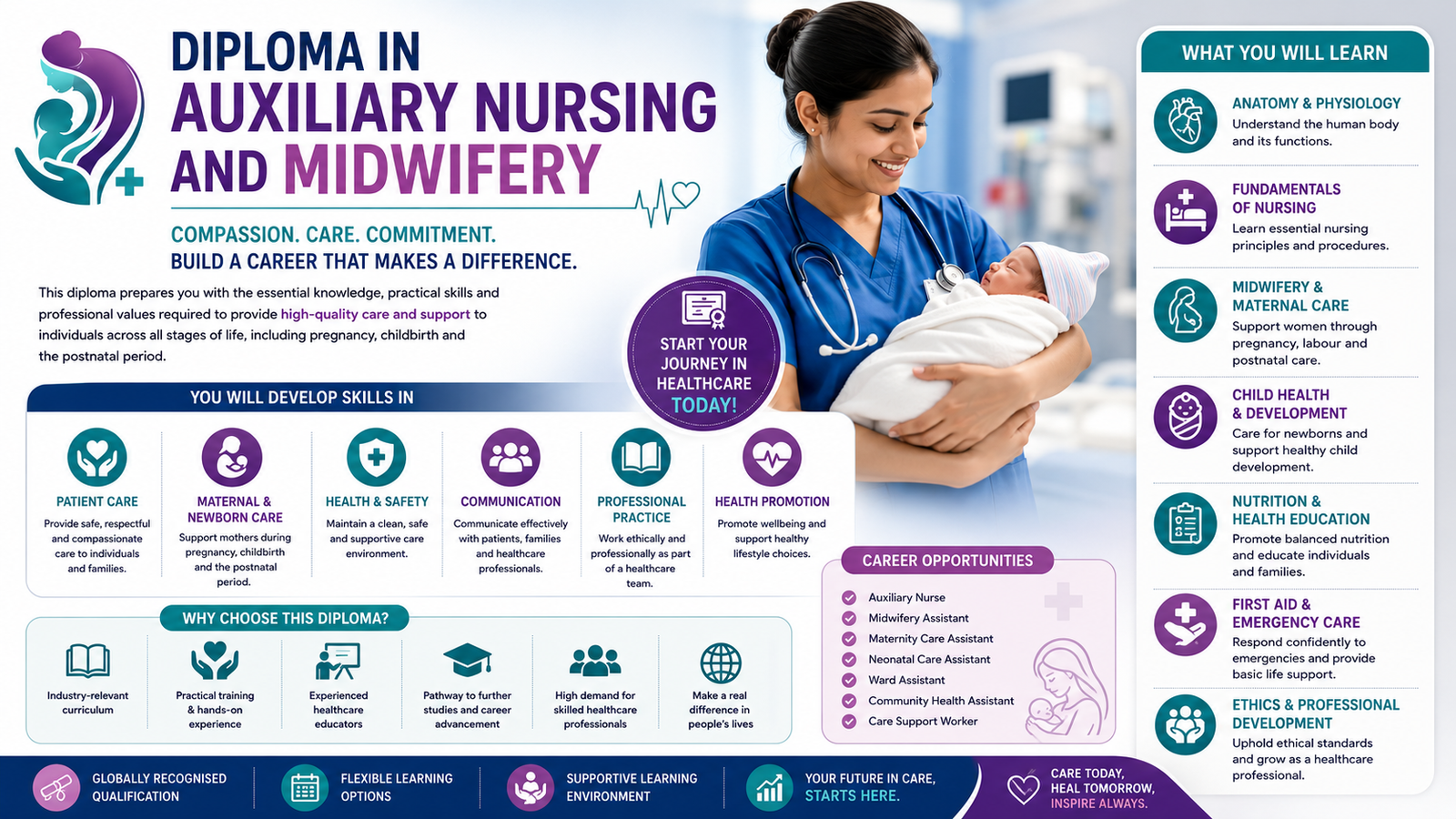
The Diploma in Auxiliary Nursing and Midwifery (Level 3) is designed to prepare learners for roles within healthcare by developing essential nursing and midwifery knowledge, practical skills and professional awareness. The programme combines theoretical learning with practical activities and focuses on patient care, maternity support, communication, safety, ethics and community health.
Course Fee: £500
The course fee includes access to online learning materials, assessments, tutor support and the student learning portal.
Payment Options:
Please contact the admissions team for further information regarding payment arrangements.
Introduction to Nursing & Midwifery
Introduces the roles and responsibilities of auxiliary nurses and midwives and the importance of teamwork in healthcare. Learners also explore the historical development of nursing and midwifery and how past developments influence current practice.
Anatomy and Physiology
Develops understanding of the structure and function of the major systems of the human body. Learners also examine common diseases and disorders and consider how these conditions affect nursing care and patient management.
Health & Safety in Healthcare
Explores the principles of health and safety within healthcare environments, including common hazards and safe working procedures. Learners develop an understanding of risk assessment, risk reduction and the importance of effective health and safety policies and training.
Patient Care and Comfort
Focuses on the principles of patient care, comfort and wellbeing. Learners develop practical understanding of basic care procedures, communication, care planning and ways to evaluate the effectiveness of care interventions for individual patients.
Midwifery Care and Practices
Introduces the stages of pregnancy and childbirth and the role of the midwife in prenatal and postnatal care. Learners also explore patient-centred maternity care, support during childbirth and the development of care plans for mothers and newborns.
Pharmacology for Nurses
Introduces basic pharmacology, including pharmacokinetics, pharmacodynamics and the legal and ethical considerations associated with medicines. Learners examine commonly used medications, indications, contraindications, side effects and safe administration under supervision.
Mental Health Awareness
Develops awareness of common mental health conditions and the role of nursing staff in supporting people with mental health needs. Learners explore early intervention, anxiety, depression, severe mental health conditions and strategies for promoting mental wellbeing.
Ethical and Legal Aspects of Care
Explores ethical principles such as confidentiality, consent and decision-making in healthcare. Learners also examine key legal responsibilities, relevant healthcare laws and regulations and approaches to analysing ethical and legal dilemmas in practice.
Communication in Healthcare
Develops understanding of effective communication in healthcare and the importance of patient-centred communication. Learners consider communication methods, common barriers and practical strategies for communicating effectively with patients, families and healthcare teams.
Professional Development in Nursing
Explores professional development, reflective practice and lifelong learning within nursing. Learners develop skills in personal development planning, reflection and portfolio building to support ongoing professional growth and career development.
Community Health and Wellness
Introduces the principles of community health, preventive care and health promotion. Learners explore community health initiatives, health disparities and methods for designing and evaluating health promotion activities for different population groups.
Advanced Midwifery Practices
Develops understanding of high-risk pregnancy management, neonatal care and advanced midwifery practice. Learners examine care planning for complex pregnancies, obstetric and neonatal needs and the use of appropriate interventions in diverse healthcare settings.
The programme is designed to prepare learners for further education and career progression within the healthcare sector. The supplied course specification does not identify a specific university, degree programme or guaranteed direct-entry arrangement. Any progression to further or higher education would therefore be subject to the entry and recognition requirements of the receiving institution.
Want to receive push notifications for all major on-site activities?